VAT Invoice Requirements UK
A VAT invoice is the document that shows the VAT charged on a sale. It lets the buyer check the VAT they have paid and, where the rules allow, reclaim it through their VAT return. For the seller, it is the main record of VAT charged. This guide sets out the VAT invoice requirements UK businesses must meet, including what a full VAT invoice must show, when a simplified invoice can be used, how a pro-forma invoice differs from a VAT invoice, when to issue a credit note, and how to handle electronic invoicing and record keeping. It is general information only and not tax advice. Always check the current rules with HMRC or a qualified professional before you act.
What a Full VAT Invoice Must Show
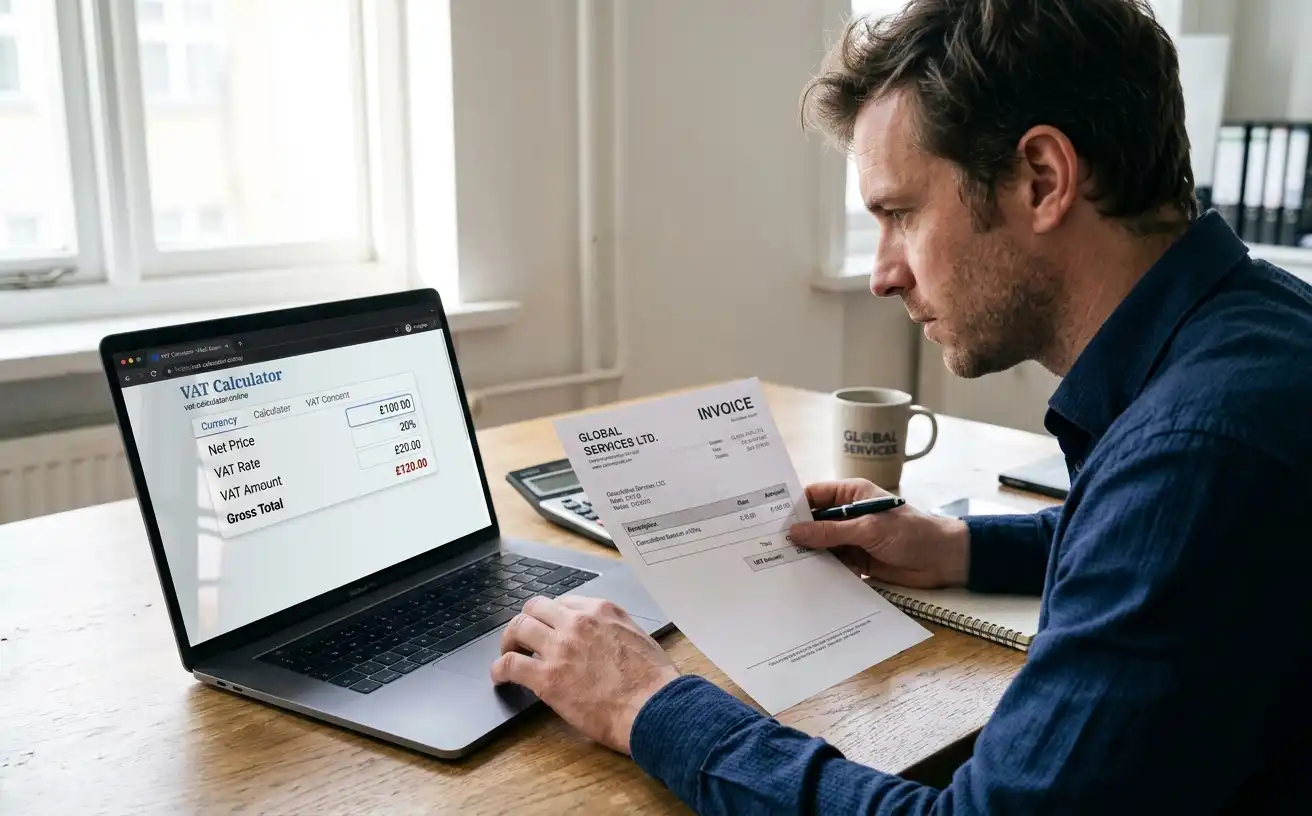
A full VAT invoice must show a set of details that identify the supplier, the buyer, the supply and the VAT. Without those details, the buyer may not be able to reclaim the VAT, and the seller may face questions from HMRC. The details below are the core of a full VAT invoice. Keep the format clear and consistent so every invoice is easy to check.
- The supplier name and business address.
- The supplier VAT number.
- A unique invoice number that follows in sequence.
- The invoice date.
- The customer name and address.
- A description of the goods or services supplied.
- The quantity of the goods or the extent of the services.
- The date of the supply, known as the time of supply, if it differs from the invoice date.
- The VAT rate applied to each item.
- The amount of VAT charged, in pounds sterling.
- The total amount payable, including VAT.
Where an invoice covers goods or services at more than one VAT rate, show the VAT for each rate separately. Where a supply is zero rated or exempt, show that on the invoice rather than leaving the VAT line blank, so the buyer can see why no VAT was charged. If you charge VAT at the standard rate, our add VAT calculator can help you work out the VAT and the gross total before you issue the invoice.
Use a clear invoice numbering sequence and do not reuse or skip numbers without a record of why. A gap in the sequence can look like a missing invoice, and HMRC may ask about it. If you issue invoices from software, check that the software keeps the numbering in order and that it stores a copy of every invoice issued.
Simplified VAT Invoices
A simplified VAT invoice shows fewer details than a full VAT invoice. It can be used when the total amount including VAT is below the simplified invoice limit. A simplified invoice is common for till receipts and for small sales where a full invoice would be more detail than the sale needs. Even a simplified invoice must still show the key details, so do not treat it as a receipt with no VAT information.
- The supplier name and business address.
- The supplier VAT number.
- The invoice date.
- A description of the goods or services.
- The VAT rate and the VAT amount, or a statement that VAT is included at the rate shown.
A simplified invoice does not need to show the customer name and address. That is why it suits retail sales where the buyer is a member of the public. If the buyer asks for a full VAT invoice, issue one, even when the sale was small. The buyer may need the full details to reclaim the VAT or to keep a complete record of the purchase.
Pro-Forma Invoices and VAT Invoices
A pro-forma invoice is not a VAT invoice. It is a quote or a request for payment that sets out what a buyer would pay if they go ahead. It may look like an invoice, but it does not show a completed supply and it cannot be used to reclaim VAT. A VAT invoice is issued after the supply, and it must show the VAT details set out in this guide. If you send a pro-forma invoice, label it clearly as pro-forma so the buyer does not mistake it for a VAT invoice.
The difference matters for both sides. The seller should not account for VAT on a pro-forma invoice as if it were a sale. The buyer should not reclaim VAT on a pro-forma invoice. When the supply takes place, issue the VAT invoice with the correct VAT details. If the price changes between the pro-forma invoice and the supply, the VAT invoice must show the price actually charged, not the price on the pro-forma invoice.
VAT Credit Notes
A VAT credit note corrects a VAT invoice. Use one when goods are returned, when the price changes after the invoice, when a discount is given after the invoice, or when an invoice was wrong. The credit note must show the reason for the correction and the change to the VAT amount, so both businesses can correct their VAT records. It should refer to the original invoice number and date, so the correction can be traced.
Issue the credit note as soon as you know a correction is needed. Do not simply send a second invoice for the new amount without cancelling or correcting the first one, because that can leave two invoices for the same supply in your records. If the correction increases the amount due, you may need to issue a further VAT invoice rather than a credit note. If you are unsure, check the HMRC guidance or ask a qualified professional.
Electronic Invoicing
Electronic VAT invoices are allowed, including invoices sent by email or through invoicing software. An electronic invoice must show all the details of a paper VAT invoice. The format is less important than the content, but the invoice must be readable and must be kept in a form that can be produced if HMRC asks. A PDF sent by email is a common way to send an electronic VAT invoice. If you use invoicing software, check that it keeps a copy of every invoice and that the copies cannot be changed without a record of the change.
Agree the method with your customer where you can. Some customers need invoices in a particular format to match their own systems. Sending an invoice by email does not change the VAT rules. The invoice must still be issued, must still show the VAT details, and must still be kept for the required period. If you send invoices by email, keep a copy in your own records rather than relying on the sent items folder alone.
Record Keeping
Keep VAT invoices and related VAT records for the period HMRC requires. Keep them in a safe place where you can find them if HMRC asks, and keep both paper and electronic copies in a readable form. Records should cover sales invoices, purchase invoices, credit notes, and the workings behind your VAT returns. If a record is lost, try to get a copy from the other business and keep a note of what happened. Good records make VAT returns faster and reduce the chance of errors.
Before you register for VAT, read our guide to registering for VAT in the UK so you know when registration is due and what happens after you receive your VAT number. Once registered, use the invoice checks in this guide every time you issue or receive an invoice, so missing details are caught early.
Check the VAT on an Invoice
Use our add VAT calculator to work out the VAT on a net amount, and our reverse VAT calculator to pull the VAT out of a gross amount. For general UK checks, our UK VAT calculator covers both directions at the UK standard rate.
Frequently Asked Questions
What must a full VAT invoice show?
A full VAT invoice must show the supplier name, address and VAT number, the invoice number and date, the customer name and address, a description of the goods or services, the VAT rate, the VAT amount and the total amount. It must also show the time of supply if that differs from the invoice date.
When can I use a simplified VAT invoice?
You can use a simplified VAT invoice when the total amount including VAT is below the simplified invoice limit. A simplified invoice shows fewer details than a full VAT invoice, but it must still show the supplier name and VAT number, the date, a description of the goods or services, and the VAT rate and amount.
Is a pro-forma invoice a VAT invoice?
No. A pro-forma invoice is a quote or request for payment. It is not a VAT invoice and it cannot be used to reclaim VAT. A VAT invoice is issued after the supply and must show the VAT details set out in this guide.
What is a VAT credit note for?
A VAT credit note corrects a VAT invoice, for example when goods are returned, the price changes, or an invoice was wrong. The credit note must show the reason for the correction and the change to the VAT amount, so both businesses can correct their VAT records.
Can I send VAT invoices by email?
Yes. Electronic VAT invoices are allowed, including invoices sent by email or through invoicing software. The invoice must still show all the details of a paper VAT invoice, and both businesses must keep a readable copy.
How long must I keep VAT invoices?
You must keep VAT invoices and related VAT records for the period HMRC requires. Keep them in a safe place where you can find them if HMRC asks, and keep both paper and electronic copies in a readable form.
VAT Calculator provides VAT calculations and information for general informational purposes only. Calculator results are estimates and should not be considered tax, legal, accounting, or financial advice. VAT rates and rules may change, so please verify important information with official sources or a qualified professional before making financial or tax decisions.