Foreign VAT Reclaim for Businesses
Foreign VAT reclaim allows a business to recover certain VAT paid on business expenses in another country. For UK VAT refunds, see our UK VAT refund guide. For EU VAT refunds, use our EU VAT refund calculator.
The VAT shown on an invoice is not automatically the amount a business can recover. The expense must qualify, the business must meet the refund conditions, and the required invoices and supporting documents must be available.
The claim process also depends on where the business is established. EU businesses generally use an electronic refund procedure through their home Member State when reclaiming VAT paid in another EU country. Businesses established outside the EU may face different procedures, reciprocity conditions, expense restrictions, or local representation requirements.
Who Can Reclaim Foreign VAT
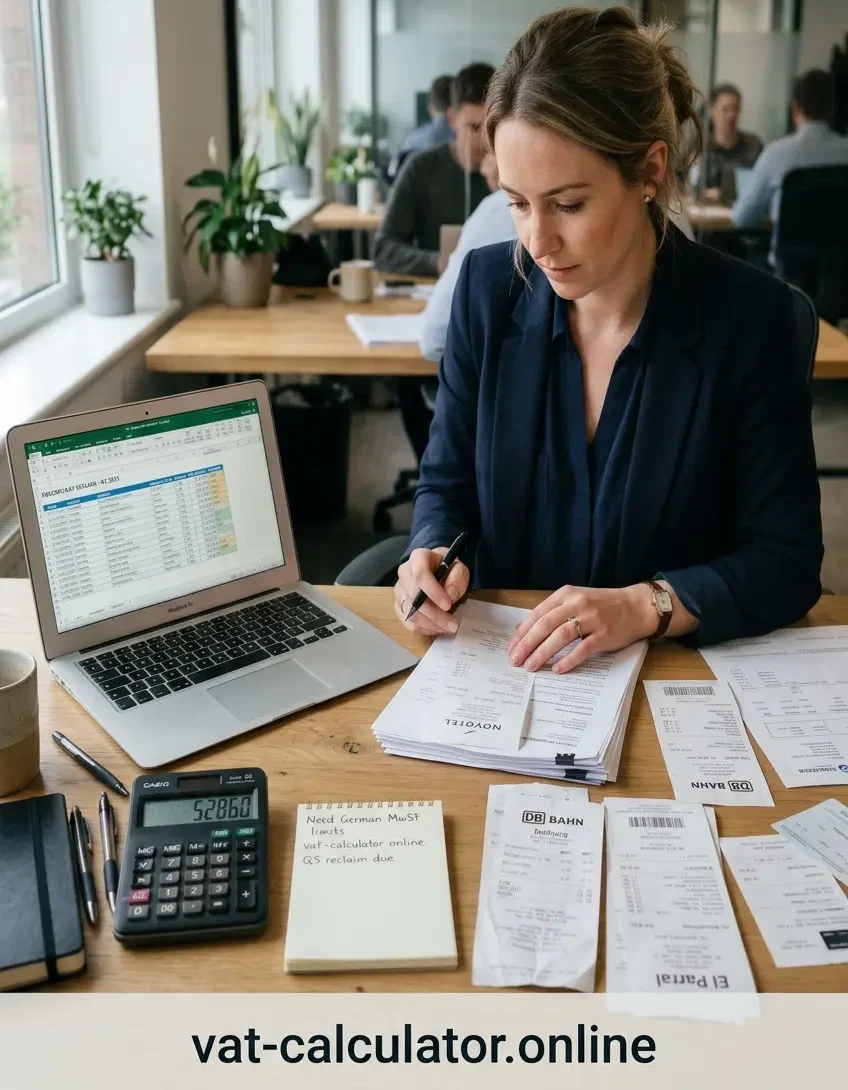
A business may be able to reclaim VAT paid in another country when the expense relates to its business activity and the refund country’s rules allow recovery.
For EU businesses, the cross-border EU refund system generally applies when VAT is incurred in another EU Member State where the business is not established and is not normally required to register for VAT. The claim is submitted electronically through the business’s own tax authority, which forwards it to the country where the VAT was incurred.
Businesses established outside the EU may also qualify for VAT refunds in some EU countries. The refund country can apply additional conditions, including reciprocity requirements, restrictions on eligible expenses, or a requirement to appoint a tax representative.
UK businesses can also reclaim certain foreign VAT. HMRC says the procedure depends on the country where the VAT was paid, and a UK business may need a certificate of status to support a claim.
How Cross-Border VAT Reclaim Works
The basic process is:
- Identify the country where the VAT was charged.
- Check whether the business and expense qualify for a refund.
- Collect the required VAT invoices and supporting documents.
- Work out the amount of eligible VAT.
- Submit the claim through the required procedure.
- Respond to any request for additional information.
- Wait for the claim to be reviewed and the refund to be issued.
For eligible EU businesses reclaiming VAT from another EU Member State, the claim is normally submitted electronically through the business’s home tax authority. That authority checks the claim and forwards it to the country where the VAT was incurred.
Businesses outside the EU may need to submit the claim directly to the refund country. The exact process can vary, so the country’s own VAT refund rules should be checked before preparing the claim.
The amount claimed should be based on VAT that is actually recoverable. A full invoice amount does not mean that all of the VAT can be reclaimed.
Documents Needed for Foreign VAT Recovery
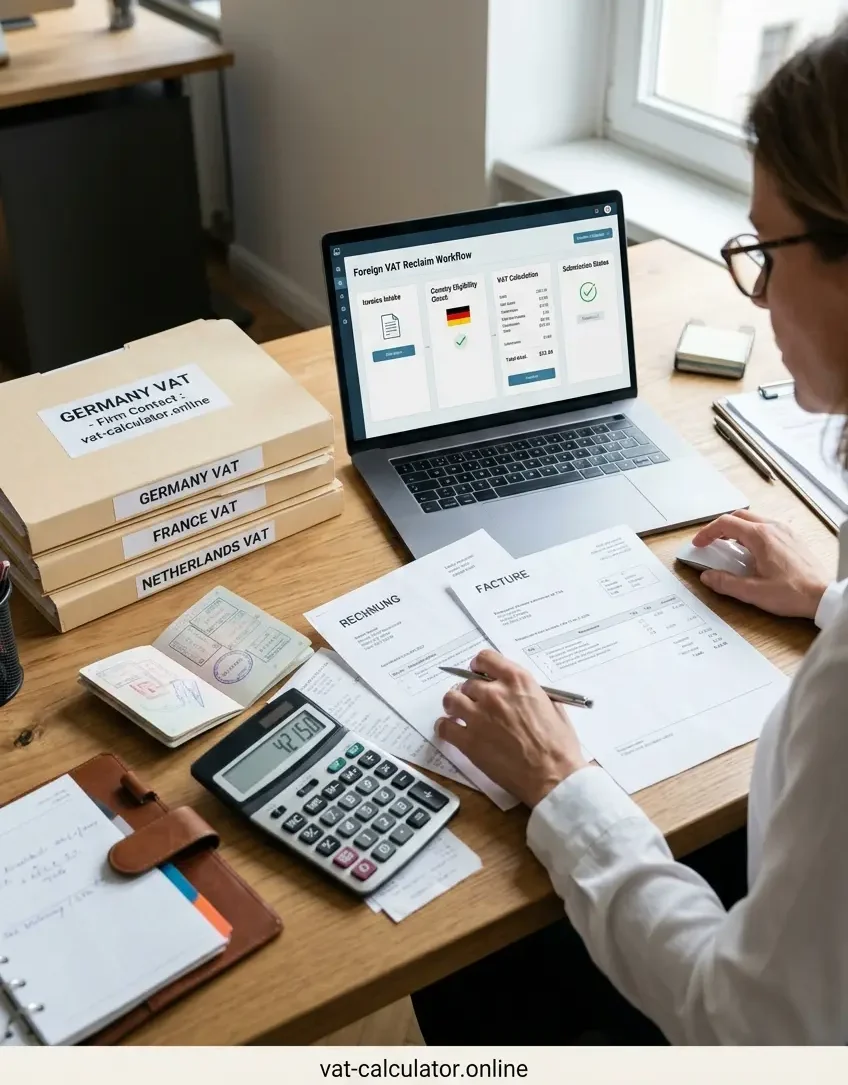
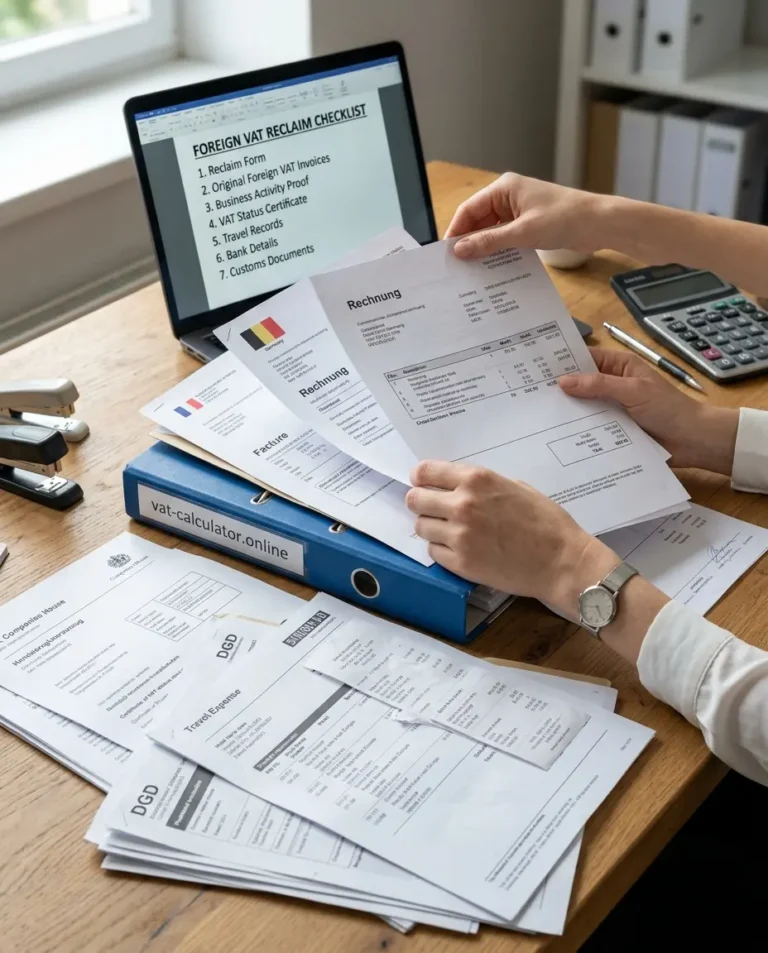
The exact documents depend on the country and type of expense, but a business may need:
- Valid VAT invoices
- Proof that the expense relates to business activity
- Business or VAT registration details
- Certificate of VAT or taxable status where required
- Bank details for the refund
- Import or customs documents where relevant
- Travel and expense records
- Country-specific refund forms
- Copies of submitted claims and correspondence
For an EU cross-border refund claim, the electronic application must contain the information required by the refund system. Non-EU businesses may have to provide additional documents because each refund country can impose its own conditions.
Keep the original invoices and supporting records. A refund authority may ask for additional evidence before deciding the claim.
For UK businesses, HMRC can issue a certificate of status confirming that a VAT-registered UK business is trading in the UK. Some foreign refund authorities may require this document.
EU VAT Reclaim vs Non-EU Business Claims
Where the business is established affects the refund procedure.
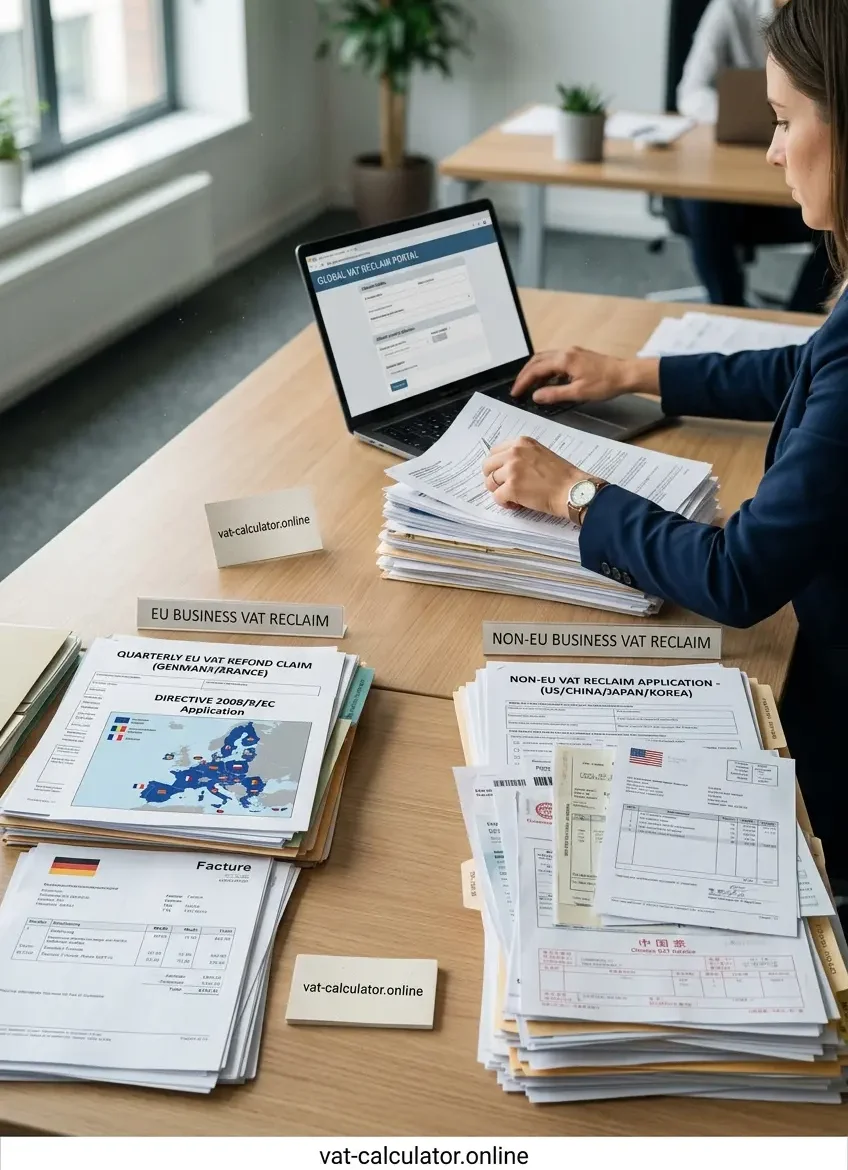
| Factor | EU Business Claim | Non-EU Business Claim |
| Business location | Established in an EU Member State | Established outside the EU |
| VAT paid in | Another EU Member State | An EU Member State |
| Main application route | Electronic claim through the home tax authority | Procedure set by the refund country |
| Reciprocity | Not normally part of the EU-to-EU procedure | May apply |
| Expense restrictions | Country-specific rules apply | Country-specific rules may include additional restrictions |
| Tax representative | Not normally required for the standard EU procedure | May be required by some countries |
| Supporting documents | VAT details and required claim information | VAT details plus any locally required documents |
For EU businesses, the refund system is designed for cross-border VAT incurred in another Member State. The home tax authority forwards the electronic claim to the refund country.
For non-EU businesses, the refund country can decide whether reciprocity applies and can impose additional conditions. The European Commission also notes that Member States may restrict certain expenditure categories or require a tax representative.
Foreign VAT Reclaim for UK Businesses
UK businesses that pay VAT in another country normally need to use that country’s refund procedure.
HMRC states that UK and Isle of Man businesses can claim refunds of VAT incurred abroad, but the process varies between countries. A UK business may also need to provide a VAT66 certificate of status.
This means foreign VAT is generally not simply added to the normal UK VAT return. The claim is made under the refund procedure of the country where the VAT was charged.
The country may set its own deadline, minimum claim amount, eligible expenses, invoice requirements and application method.
Germany and Denmark VAT Refund Procedures
Germany and Denmark illustrate why foreign VAT claims need to be checked country by country.
An EU business reclaiming German VAT will generally use the electronic EU refund procedure through its home Member State. A business established outside the EU follows the procedure set by the German tax authority and may be subject to additional conditions.
Denmark has a separate procedure for businesses established outside the EU. Danish guidance states that eligible businesses can claim VAT on qualifying business purchases, with applications generally covering at least three months and no more than one calendar year. The deadline for a non-EU business claiming Danish VAT is 30 September of the year after the purchases were made.
The Danish example shows why a business should not assume that the deadline or application process is the same in every country.
When Foreign VAT Is Not Recoverable
Foreign VAT may not be refundable simply because it was charged on a business expense.
The refund country decides which expenses qualify and whether any limits apply. Common reasons for a claim being partly or fully unrecoverable include:
- The expense is not related to business activity.
- The expense falls into a restricted category.
- The business must register for VAT in the refund country instead of using the refund procedure.
- A valid VAT invoice is missing.
- Required supporting documents are missing.
- The claim is submitted after the deadline.
- The minimum claim amount is not met.
- The business does not meet the country’s eligibility conditions.
- Reciprocity rules prevent a non-EU business from claiming.
- Only part of the expense is business-related.
- The VAT is not recoverable under the refund country’s rules.
An expense that qualifies in one country may be restricted or excluded in another. Travel, accommodation, meals, passenger transport, fuel and trade-fair costs are examples where country-specific rules can affect recovery.
Before adding an expense to a claim, check the rules of the country where the VAT was paid.
Foreign VAT Reclaim Deadlines
There is no single deadline for every foreign VAT reclaim.
Each refund procedure can set its own claim period and deadline. For example, Denmark requires non-EU businesses to submit claims by 30 September in the year after the relevant purchases.
UK businesses claiming VAT from EU countries should check the current deadline for the specific country rather than relying on an old EU-wide date.
The claim period can also affect the minimum amount that can be claimed. Some countries allow claims covering a shorter period only when certain conditions are met.
Foreign VAT Reclaim Through an Agent
A business can use an agent to handle a foreign VAT reclaim when the relevant procedure allows it.
The business normally needs to provide the agent with the required invoices, business details and authority to act. Some refund authorities require a formal letter of authority.
HMRC, for example, states that agents handling overseas VAT repayment enquiries may need a letter of authority from their client.
Before using an agent, check:
- What countries the agent covers
- What documents are required
- Whether the agent charges a percentage or fixed fee
- How rejected claims are handled
- Who is responsible for responding to tax-authority requests
Currency Conversion for Foreign VAT Claims
Foreign VAT may be recorded in a currency different from the business’s accounting currency.
The original invoice should show the actual purchase value and VAT charged. The refund procedure may specify how amounts should be converted for the claim.
Keep the original foreign-currency figures together with any exchange-rate or conversion records used in the accounting and refund process.
Do not change the VAT amount on the original invoice simply to match the business’s home currency. The refund authority needs to be able to reconcile the claim with the supporting documents.
FAQs
Final Thoughts
Foreign VAT reclaim can help businesses recover VAT paid on eligible expenses in other countries, but the amount charged on an invoice is not automatically the amount that can be recovered.
Start by identifying where the VAT was paid and whether the business and expense qualify under that country’s refund rules. EU businesses and non-EU businesses can follow different procedures, while UK businesses normally need to use the process provided by the country where the foreign VAT was incurred.
Before submitting a claim, check the eligible expenses, required invoices, claim period, deadline, minimum amount and any country-specific conditions. If an agent is handling the claim, also check the agent’s authority and fees.
Keeping complete invoices and supporting records from the start can make a foreign VAT reclaim much easier to prepare and review.
Official Sources
- European Commission — VAT Refunds
- HMRC — Refunds of UK VAT for non-UK Businesses / Overseas VAT Refunds
- HMRC — Certificate of Status for UK Businesses
- Danish Tax Agency — VAT Refunds for Foreign Businesses
- National Tax Authority of the Country Where the VAT Was Paid