
UK Import Duty and VAT Calculator
A UK Import Duty and VAT Calculator helps estimate the taxes and duties that may apply when goods are brought into the UK from another country. The calculation can depend on the value of the goods, their commodity code, where they come from, and the costs linked to the import.
Import Duty and import VAT are not the same charge. Customs Duty is usually based on the customs value and the applicable duty rate, while the value used for import VAT can also include Customs Duty and certain transport, insurance, handling, and other import-related costs.
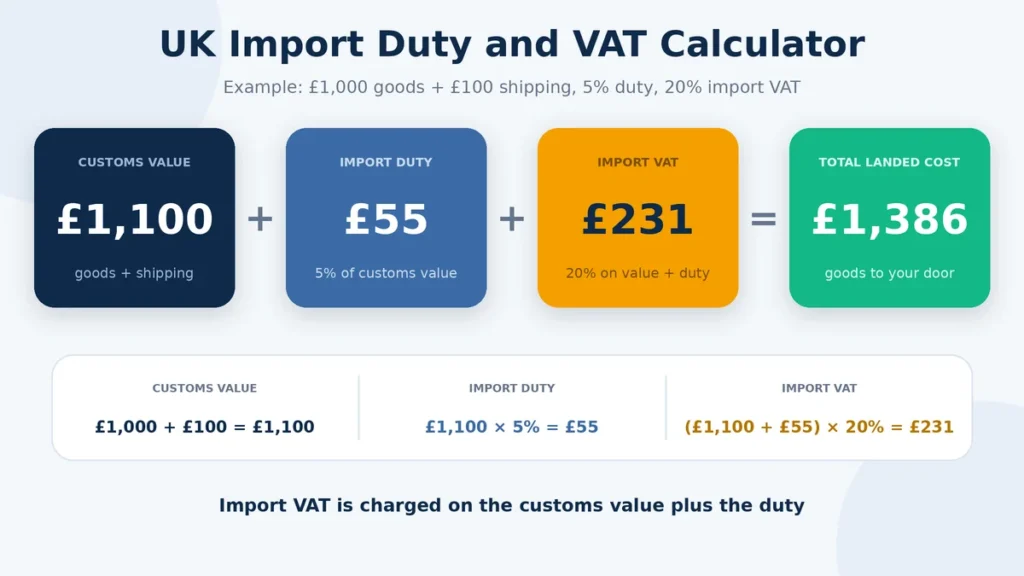
The calculator can give you a useful estimate before you place an order, receive a shipment, or prepare an import declaration. The final amount can still vary when the exact commodity code, customs valuation method, origin rules, or other charges need to be applied.
How the UK Import Duty and VAT Calculator Uses Your Inputs
The calculator combines the information about your shipment to estimate the import costs. Each input has a different role in the calculation.
- Goods value: The price paid or payable for the imported goods is one of the starting points for the calculation.
- Country of origin: The goods’ origin can affect the duty rate or whether a preferential rate is available.
- Commodity code: This identifies the goods for customs purposes and determines which duty and VAT rules may apply.
- Shipping and insurance: Certain transport and insurance costs may form part of the customs value or import VAT calculation, depending on the circumstances.
- Customs Duty rate: The applicable rate is used to estimate the amount of Customs Duty due.
- Import VAT rate: The relevant VAT rate is applied to the VAT value after the required customs elements have been considered.
- Additional costs: Some import-related charges may affect the final amount you actually pay but may not form part of the calculator’s tax estimate.
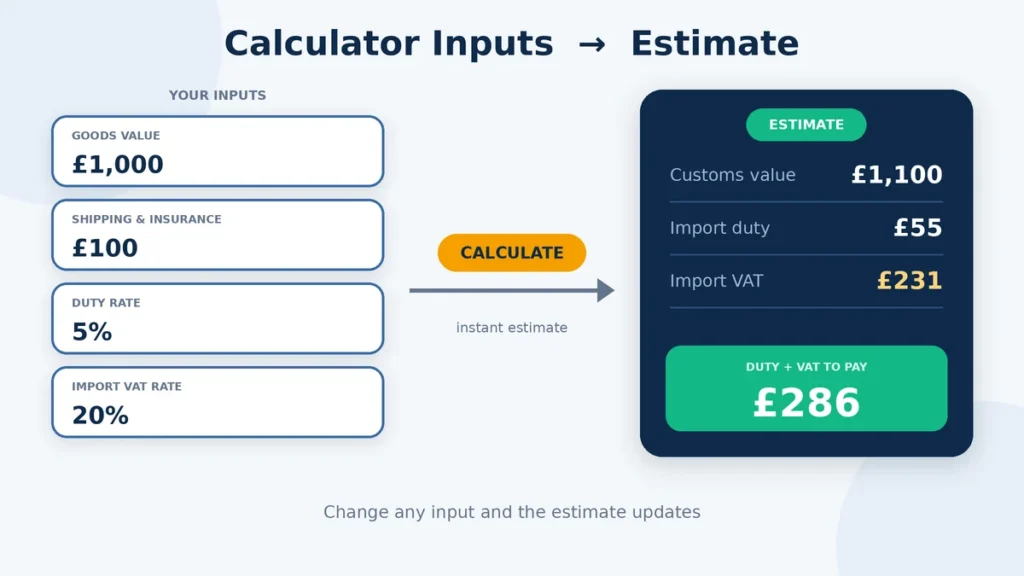
The result should be treated as an estimate rather than a guaranteed customs bill. The exact amount can depend on the correct commodity code, origin, customs valuation rules, and any reliefs or special arrangements that apply to the shipment.
Customs Value, Duty and Import VAT
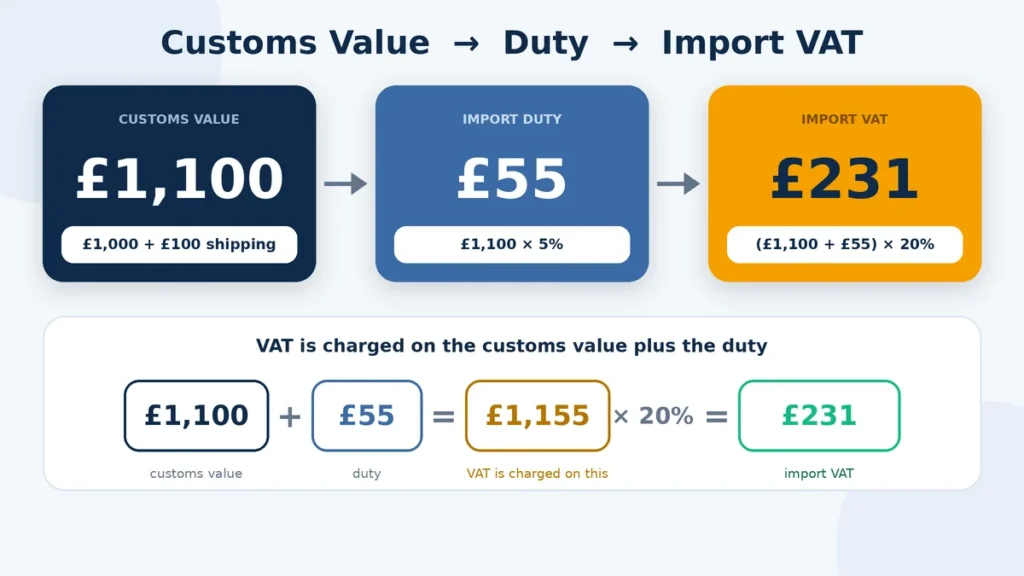
Customs value is the value used to work out Customs Duty and is also the starting point for calculating import VAT. In many imports, the customs value is based on the price paid or payable for the goods, with required adjustments for items such as certain transport, insurance and packing costs. The exact valuation method can vary depending on the circumstances of the import.
Customs Duty is calculated using the duty rate that applies to the goods. That rate depends on factors such as the commodity code and origin of the goods. Import VAT is worked out separately, but its taxable value can be higher than the customs value because it can include Customs Duty and certain incidental expenses connected with bringing the goods to their first destination in the UK.
This is why import VAT cannot always be estimated by simply applying the VAT rate to the purchase price. A calculator needs to account for the customs value and the other costs that belong in the VAT calculation. The exact treatment can change for different types of imports, so the calculator result should be checked against the relevant UK customs rules before relying on it for an actual declaration.
Import Cost Components to Include
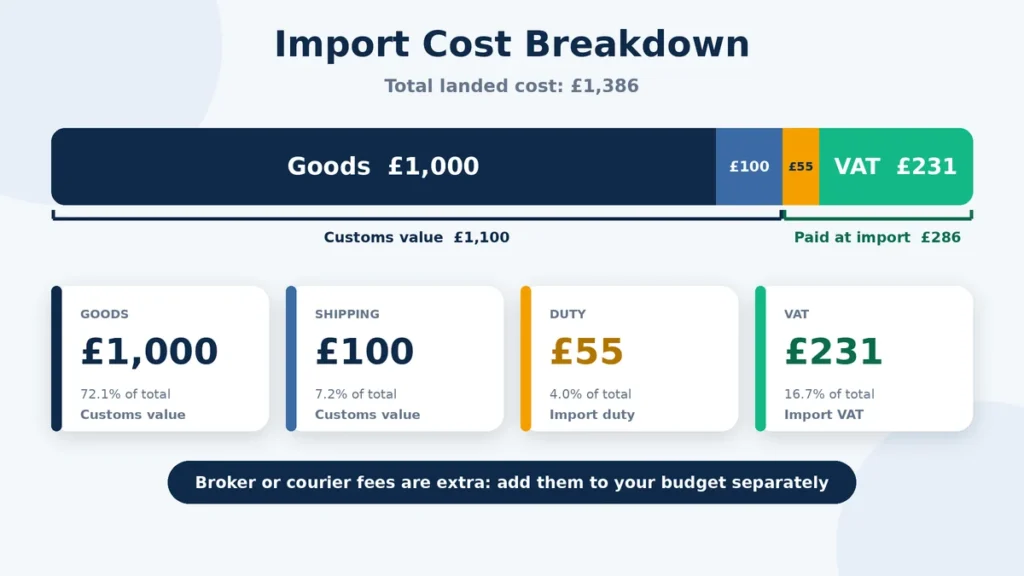
The total cost of bringing goods into the UK can contain several separate amounts. A calculator may use some of these to estimate Customs Duty and import VAT, while other charges may be payable to a courier, carrier, customs agent, or other service provider.
| Cost Component | How It Can Affect the Import Cost |
| Goods price | Forms the starting point for the customs value in many imports. |
| Transport and freight | Certain transport costs can be included in the customs value, depending on where and how the costs arise. |
| Insurance | Insurance connected with transporting the goods to the UK can form part of the customs value. |
| Customs Duty | Calculated using the customs value and the duty rate that applies to the goods. |
| Import VAT | Calculated using the customs value plus applicable duty and certain import-related expenses. |
| Excise Duty | May apply to specific goods and can also affect the value used for import VAT. |
| Courier or handling charges | May increase the amount you actually pay but are not necessarily part of the tax calculation. |
| UK delivery costs | Treatment can depend on where the cost arises and whether it can be separately identified. |
The exact treatment of each cost depends on the circumstances of the shipment. HMRC requires certain transport, insurance, packing and handling costs to be included in customs valuation, while some costs after the relevant UK border point may be treated differently. For import VAT, the value can also include Customs Duty, Excise Duty and certain incidental expenses.
This distinction matters when estimating the final amount. A courier invoice can contain charges that are separate from Customs Duty and import VAT, so the calculator estimate may not match the final amount requested by the delivery company.
Imports from the US and Other Countries
Goods imported into the UK from the US or another country can be subject to Customs Duty and import VAT. The rate of Customs Duty depends on the goods, their commodity code and their origin. The country where the goods were bought or shipped from is not always the same as their country of origin, so this distinction matters when checking the correct tariff treatment.
The same basic approach applies to imports from many other countries, but the duty rate can change when the UK has a trade agreement or another preferential arrangement with the country of origin. To claim a reduced or zero rate, the goods must meet the relevant rules of origin and the required proof of origin may need to be available.
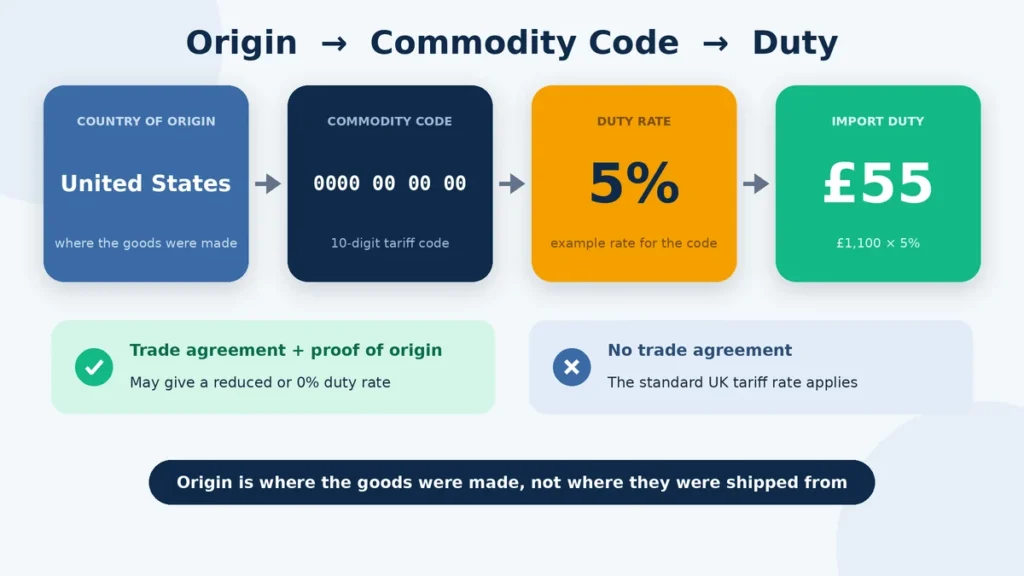
Import VAT is a separate consideration. Its value is based on the customs value and can include Customs Duty plus certain transport, insurance, packing and other incidental costs up to the goods’ first destination in the UK. This means an import from the US and an import of the same goods from another country can produce different duty results even when the purchase price is identical.
For a more accurate estimate, enter the actual country of origin, correct commodity code, goods value and relevant shipping or insurance costs rather than assuming that every country uses the same duty rate.
FAQs
Final Thoughts
A UK Import Duty and VAT Calculator can give you a useful estimate before goods arrive, but the result depends on the information entered. The goods value, country of origin, commodity code, shipping and insurance costs can all affect the calculation.
It also helps to keep Customs Duty and import VAT separate. A zero duty rate does not necessarily mean that no import VAT is due, and courier or handling charges may sit outside the calculator’s tax estimate.
For a closer estimate, use the correct commodity code and actual origin of the goods, then check the relevant UK customs rules. When importing regularly, keep your invoices, shipping records, customs documents and VAT evidence together so the figures can be checked later.
Before placing your next overseas order, have you checked the goods’ commodity code, origin and import costs?